The Doric colonnade of the Temple of Apollo Epicurius at Bassae standing in the Arcadian mountains beneath its protective shelter

Stand inside the mountain temple that thanked Apollo for lifting a plague

Temple of Apollo Epicurius at Bassae timed entry — one of the best-preserved classical temples in Greece, high in the Arcadian mountains and Greece's very first UNESCO World Heritage Site. We handle the operator portal and hold your dated hourly slot, so your long mountain drive ends at an open gate.

See ticket options
  • 1986 Greece's first UNESCO site
  • 5th C. BC Attributed to Iktinos
  • 1,130 m High in the Arcadian mountains
  • 3 Classical orders combined

Choose your ticket

  • Book in your languageYour currency, final price.
  • Pro tips includedBest slots, the details most visitors miss.
  • Ready before you flyMobile ticket, ready in your inbox.
  • 24/7 human supportReal people, any hour, any time zone — 24/7, in your own language, right through to your visit day.
4.8 from 96 verified travellers
Sophie R.
Manchester, England
“The drive up into the mountains is long but unforgettable, and then the temple appears inside its great shelter. Standing among the Doric columns of a building attributed to the architect of the Parthenon, in total quiet at over a thousand metres, was extraordinary. The short audio history beforehand made every detail make sense.”
May 2026
David M.
Sydney, Australia
“Booking was easy and our slot was held exactly as promised, which mattered after four hours on the road from Athens. We paired it with Olympia the day before. Having someone handle the Greek ticketing portal for us in English took all the worry out of a very remote trip.”
April 2026
Anna L.
Hamburg, Germany
“Do know it stands under a protective tent with some scaffolding — it isn't a postcard from the outside. But being that close to the earliest Corinthian capital and the three orders in one temple more than made up for it. Bring a warm layer; it was cool and breezy even in June.”
June 2026

Audio guide · 5-minute

Your 5-minute Temple of Apollo Epicurius pre-visit briefing

A short, calm narrative — why the Phigaleians built this temple to Apollo the Helper high in the mountains, the architect Iktinos and the three orders combined in one building, the frieze now in London, and how to read the temple within its protective shelter. Listen on the mountain drive up to Bassae.

Included with your booking — your full guide arrives with your ticket.Get your guide
  • Second half of the 5th century BC — Phigaleia dedicates the temple to Apollo Epikourios, 'the Helper', in thanks for deliverance from a plague
  • Attributed to Iktinos, the architect of the Parthenon, in a remote mountain setting at about 1,130 m
  • Three orders in one building — a Doric exterior, an Ionic interior, and the earliest known Corinthian capital
  • An unusual north–south orientation, with a side door that may have lit the cult statue
  • The carved Ionic frieze — Amazons and centaurs — removed in the early 19th century and now in the British Museum in London
  • Greece's first UNESCO World Heritage Site, 1986, now sheltered under a protective tent during conservation

Recorded for Apollo Epicurius Tickets concierge. Free to download.

About Temple of Apollo Epicurius

The Temple of Apollo Epicurius is one of the best-preserved and most important classical temples in Greece, and it stands where almost no other great temple does — in splendid isolation high in the mountains of Arcadia, in the Peloponnese, at about 1,130 metres above sea level near the ruins of ancient Phigaleia and above the village of Andritsaina. It was raised in the second half of the 5th century BC and is attributed to Iktinos, the architect of the Parthenon, and the people of Phigaleia dedicated it to Apollo Epikourios — 'Apollo the Helper' — in thanks for their deliverance from a plague. In 1986 it became the very first site in Greece to be inscribed on the UNESCO World Heritage List.

Architecturally the temple is remarkable. It combines all three of the classical orders in a single building: a sober Doric colonnade on the outside, an Ionic order lining the interior, and — set at the far end of the inner chamber — what is generally regarded as the earliest known Corinthian capital in the ancient world. It is unusual, too, in facing north to south rather than the customary east to west, with a side door in the east wall that may have lit the cult statue within. Running around the top of the inner chamber was a superbly carved marble Ionic frieze showing battles of Greeks against Amazons and Lapiths against centaurs; it was removed in the early 19th century and has been in the British Museum in London since 1815, so on site you see the temple's architecture rather than its sculpture.

Because the temple sits so high and so exposed, and because its fine limestone had suffered from weather and earlier interventions, since the late 20th century it has stood beneath a great protective shelter while long-term conservation continues — so visitors today experience the temple within that tent, its columns rising inside the shelter as work goes on around them. Reaching Bassae is part of the experience: the site is remote, approached by a mountain drive through Andritsaina, with wide views over the Arcadian peaks. Entry is timed by the hour within a short daily window, so we handle the ticketing in your own language and hold the slot you want, letting you give your energy to the temple and its extraordinary setting rather than to the operator's portal.
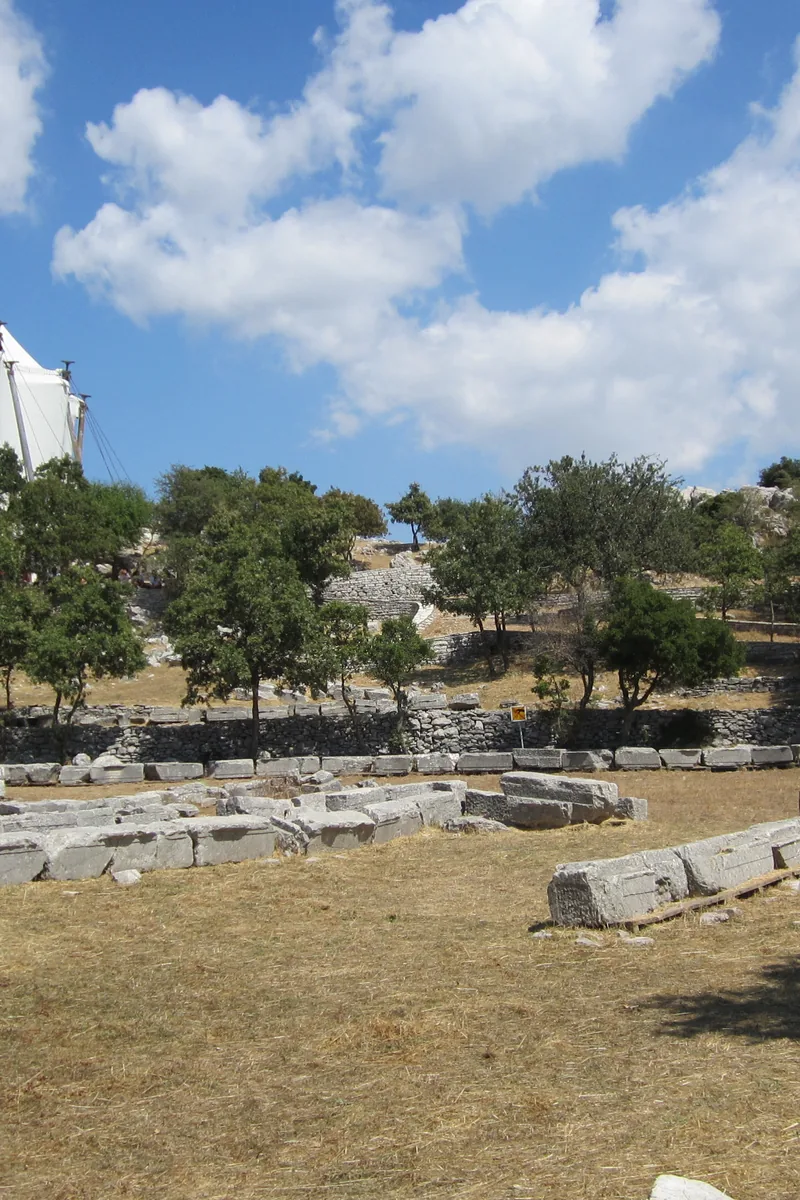
Practical information

Opening hours
Open daily, year-round, but within a short daytime window on this remote mountain site. Summer (roughly April–October) approx. 08:00–17:00; winter (November–March) shorter, often around 08:30–15:30, and there are no evening slots. Entry is timed by the hour and last entry is about 30 minutes before closing. Hours are set by the operator and change seasonally and on public holidays, and mountain weather can affect access — confirm on the day of your visit.
Address
Temple of Apollo Epicurius, Bassae (Vasses), near Andritsaina 270 61, Arcadia, Peloponnese, Greece.
Getting there
Bassae is a genuinely remote site, high in the Arcadian mountains at about 1,130 m, roughly 14 km south of the village of Andritsaina and near the ruins of ancient Phigaleia. There is little public transport, so almost all visitors arrive by car or on an organised tour. From Athens it is around a four-hour drive; the site is most often paired with Ancient Olympia, about an hour and a half away by mountain road, or reached via Andritsaina and Megalopoli. The final approach is a winding mountain drive with wide views. Allow generous travel time, keep an eye on the weather, and aim to arrive within your booked hourly slot.
Accessibility
An open, high-altitude archaeological site on uneven mountain ground, with a short walk from the car park and rough, sloping surfaces around the temple, which stands within a large protective shelter. There is little around the site itself. Sturdy shoes and a warm or weatherproof layer are wise even in summer, as it can be cool, windy or misty at altitude. Visitors with limited mobility can see the temple within its shelter but should expect uneven ground and allow extra time.
Bag policy
Day bags are fine. This is an isolated mountain site with minimal facilities and no large-luggage storage, so leave suitcases at your accommodation or in your vehicle.
Photography
Personal photography is welcome, though the temple stands within its protective shelter and scaffolding may appear in views. Tripods, professional equipment and drones may require permission; follow any signs on site.

About our service

Apollo Epicurius Tickets is an independent concierge service that helps international visitors reserve and receive their timed-entry tickets in English. We are not the archaeological site and we are not an official vendor — we purchase genuine entry tickets on your behalf from the Hellenic Ministry of Culture's official ticketing service, and our service fee is included in the price you see. If you prefer to buy directly, the operator's own ticket site is tickets.hh.gr.

Frequently asked

How does the timed entry work?

You choose the date and an hourly time slot, and your ticket is valid for a single entry during that hour on that day. Just arrive within your slot window and show your mobile ticket at the gate; last entry is about 30 minutes before closing. Because Bassae is remote and the daily window is short, we hold the slot you want so your long mountain journey ends at an open gate.

Why book with a concierge for such a quiet site?

Bassae is rarely crowded — the value here is not skipping a queue but reaching a remote mountain temple without friction. We handle the operator's ticketing portal in your own language, hold your dated hourly slot within a short daily window, and send you a pre-visit audio history, so hours of driving on mountain roads end at a confirmed entry. Our service fee is included in the price shown.

What's included in the ticket?

Full admission to the Temple of Apollo Epicurius archaeological site at Bassae, where you walk among and around the temple within its protective shelter, set high in the Arcadian mountains. It is entry to this single mountain temple; there is no on-site museum, and the temple's famous carved frieze has been in the British Museum in London since the early 19th century.

Is there a museum at the site?

No. Bassae is an isolated mountain temple with no museum on site. The building itself is the visit — one of the best-preserved classical temples in Greece, combining Doric, Ionic and the earliest known Corinthian capital. The sculpted marble frieze that once ran around the interior was removed in the early 19th century and is displayed in the British Museum in London.

Why is the temple under a tent?

Because it stands so high and exposed, and its fine limestone had suffered from weather and earlier interventions, the temple has been sheltered beneath a large protective tent since the late 20th century while long-term conservation continues. You visit the temple inside that shelter, its columns rising within the tent, and some scaffolding may be present. It is an unusual but memorable way to see a great classical building up close.

How and when do I get my ticket?

We send your ticket to your email as a mobile ticket once your booking is confirmed — there's nothing to print, just show it on your phone at the gate. You'll also receive a short 5-minute audio history to listen to on the drive up to the temple.

How do I get to the Temple of Apollo Epicurius?

Bassae is remote, high in the Arcadian mountains about 14 km south of Andritsaina. There is very little public transport, so almost everyone arrives by car or on an organised tour. From Athens it is roughly a four-hour drive; the temple is most often combined with Ancient Olympia, about an hour and a half away, or reached via Andritsaina and Megalopoli. The final stretch is a winding mountain road with wide views.

Who was Apollo Epikourios, and why was the temple built?

Epikourios means 'the Helper' or 'the Ally'. The people of ancient Phigaleia dedicated the temple to Apollo Epikourios in thanks for delivering them from a plague in the 5th century BC. It was built in the second half of that century and is attributed to Iktinos, the architect of the Parthenon, which is part of why so remote a temple is so architecturally sophisticated.

What makes the architecture so special?

The temple famously combines all three classical orders in one building: a Doric colonnade outside, an Ionic order lining the interior, and the earliest known Corinthian capital in the ancient world at the end of the inner chamber. It also has an unusual north–south orientation, with a side door that may have lit the cult statue. Together these make it one of the most studied temples in Greek architecture.

Where is the temple's frieze?

The superbly carved marble Ionic frieze that ran around the inside of the chamber — showing Greeks fighting Amazons and Lapiths fighting centaurs — was removed in the early 19th century and has been in the British Museum in London since 1815. On site you see the temple's architecture rather than its sculpture; the audio history we send explains what once stood where.

When is the best time to visit?

Because Bassae is high and exposed rather than crowded, timing is mainly about weather, daylight and the drive. Late spring to autumn gives the most reliable mountain weather and longer opening hours; winter can bring cold, mist or even snow on the roads. Aim for a morning or midday slot so you have plenty of daylight for the mountain journey, and check conditions before you set out.

How long should I allow for the visit?

The temple itself is a focused visit of about 45 minutes to an hour — it is a single building, seen within its shelter — but the journey is the main investment, as Bassae is a long drive from anywhere. Most visitors plan it as a half or full day around the drive, often combined with Ancient Olympia or the mountain villages of Arcadia.

Do I need to bring my passport or any ID?

No. The standard entry ticket is not personalised and needs no passport or name — just show your mobile ticket at the gate. (Reduced and free-entry categories set by the operator may require ID at the gate; our ticket is standard full admission.)

Is the site accessible for limited mobility?

Partly. Bassae is a high-altitude mountain site with uneven ground and a short walk from the car park to the temple, which stands within a large protective shelter. Visitors with limited mobility can reach and see the temple but should expect rough, sloping surfaces and allow extra time, and dress for cool, windy conditions at altitude.

Is the site open all year?

Yes — the site is open daily, year-round, but within a short daytime window and with no evening slots, and mountain weather can affect access. Hours are longer in summer (roughly 08:00–17:00) and shorter in winter, with timed entry by the hour and last entry about 30 minutes before closing. Confirm on the day, especially in winter.

Can I change my slot after booking?

Changes are allowed up to 2 hours before your visit, with a maximum of 2 changes per ticket, provided your preferred new slot is still open. If your plans shift — mountain weather sometimes forces it — contact our team and we'll help where the operator's rules allow. See our terms for the full policy.

Can I get a refund?

All bookings are final once confirmed; we only issue a refund in the rare event the operator cannot honour a validly issued ticket. Timed-entry tickets are non-refundable, but you can change your slot up to 2 hours before your visit within the operator's rules. See our terms for details.

Are you the official Bassae ticket office?

No. We're an independent concierge service for international visitors. We buy genuine tickets on your behalf from the Hellenic Ministry of Culture's official ticketing service and handle the booking in your own language, and our service fee is included in the price shown. You can always buy directly from the operator if you prefer.

What currency am I charged in?

The price you see is the price you pay — we show it in your local currency where we can and charge exactly that amount, with no surprise fees at checkout. Payment is by card on a secure page.